
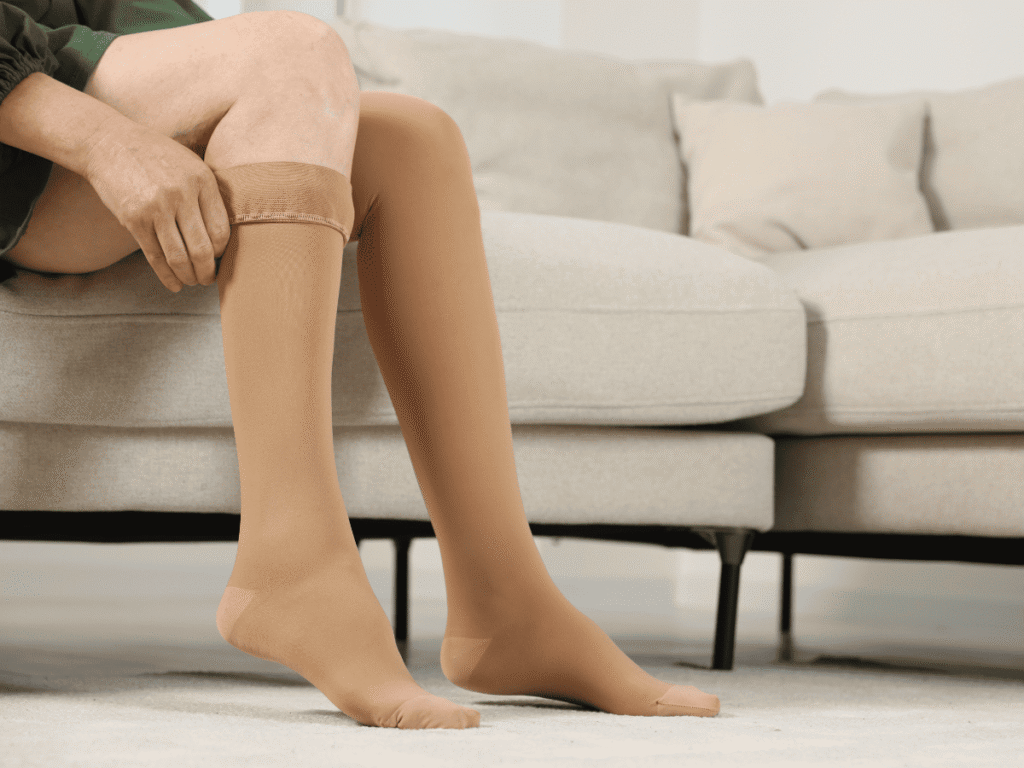
Compression stockings are one of the most commonly recommended tools for vein health, and also one of the most commonly misunderstood. Too loose and they do almost nothing. Too tight and they can be genuinely uncomfortable enough that people stop wearing them within a week. At Advanced Vein and Laser Center in York and Lancaster, we fit patients for compression regularly, and getting it right makes a real difference in how much relief it provides. Here is what compression stockings do, how to choose the right ones, and how to wear them so they help.
Graduated compression is not the same as a snug sock, and that distinction is the whole reason compression stockings work the way they do.
How Graduated Compression Actually Works
Compression stockings are built with the tightest pressure at the ankle, gradually loosening as they move up the leg. That gradient is the entire mechanism. It pushes blood upward against gravity, supporting the one way valves inside your veins and reducing the pooling that leads to swelling, aching, and heaviness by the end of the day. A stocking that squeezes evenly from top to bottom, the way many over the counter options do, does not create that same upward push and delivers far less benefit.
Compression Strength Is Not One Size Fits All
Compression is measured in millimeters of mercury, and the right strength depends on what you are trying to address. Mild compression, generally under 20 millimeters of mercury, works well for everyday leg fatigue and long days on your feet. Moderate to firm compression, prescribed after evaluation, is typically used for diagnosed venous insufficiency, visible varicose veins, or recovery after a vein procedure. Wearing a strength that does not match your actual needs is one of the most common reasons people feel like compression stockings simply do not work for them.
Getting the Fit Right Is What Matters Most
A stocking that is too tight at the calf but too loose at the ankle can work against the gradient it is supposed to create, sometimes making swelling worse. Proper fitting involves measuring your ankle, calf, and sometimes thigh circumference, along with the length needed for your leg. Our team measures patients directly, because a stocking that fits your actual leg is the difference between real relief and a drawer full of stockings you stopped wearing.
When to Wear Them, and What to Expect
Compression stockings generally work well when put on first thing in the morning, before swelling has had a chance to build during the day, and worn throughout hours of standing, sitting, or travel. Many patients notice less end of day heaviness within the first few days of consistent wear. If a pair still feels uncomfortable after the fitting and a short adjustment period, that is usually a sign the fit or strength needs a second look, not a reason to give up on compression altogether.
Let’s Get You Fitted for a Pair That Actually Works
Compression stockings only deliver real benefit when the strength and fit match your specific legs. Advanced Vein and Laser Center offers proper fitting as part of comprehensive vein care at our York and Lancaster locations. Schedule a visit and we will help you find a pair worth wearing every day.
Frequently Asked Questions
Do I need a prescription for compression stockings? Mild, everyday compression is available over the counter, but moderate to firm compression for diagnosed vein issues typically requires a fitting and recommendation from our team. This ensures you get the strength that matches your condition.
How long do compression stockings last before they need replacing? Most compression stockings lose their effective compression after about three to six months of regular wear, even if they look fine. Washing them gently and having a couple of pairs in rotation helps them last through their full useful life.
Can I wear compression stockings all day, every day? For most patients, yes, daytime wear is both safe and effective, with stockings removed at night. Our team can give you specific guidance based on your condition and any other health factors.
Will compression stockings fix my varicose veins? No, compression manages symptoms like swelling and aching but does not reverse valve damage that has already occurred. For that, a screening can determine whether a treatment like radiofrequency ablation or sclerotherapy is appropriate.
What if my compression stockings feel too tight to put on? This is common, especially with firmer compression levels, and there are tools and techniques that make application significantly easier. Our team can show you proper application methods during your fitting appointment.